Key Takeaways
- Never use a tourniquet, cut the wound, or suck out venom — these actions cause more harm than the bite itself
- Stay calm and immobilize: Keep the patient still, immobilize the bitten limb below heart level, and rush to the nearest hospital
- Antivenom is the only cure: No herb, home remedy, or desi treatment can neutralize snake venom — only hospital-administered antivenom works
- Golden time matters: Getting to a hospital within 1–3 hours dramatically increases survival chances
- Know Pakistan's Big Four: Cobra, Krait, Russell's Viper, and Saw-scaled Viper cause the majority of snakebite deaths in the region
Table of Contents
- Introduction
- Watch: Snake Bite First Aid Explained
- What Happens After a Snake Bite?
- What You Must NEVER Do
- Correct Snake Bite First Aid Steps
- Antivenom Explained
- Golden Time — Why Every Minute Counts
- Myths vs Reality
- Can You Carry Antivenom Yourself?
- The Big Four Venomous Snakes
- How Doctors Treat Snake Bites
- Long-Term Risks if Ignored
- Quick Emergency Checklist
- Frequently Asked Questions
- Conclusion
Introduction
A farmer steps into his field at dawn. He feels a sharp sting on his ankle. Within seconds, he sees a snake slithering away into the grass. His heart pounds. His family panics. Someone ties a rope tightly around his leg. Someone else grabs a blade to cut the wound open. A neighbor runs to fetch herbal paste from a local healer.
Every single one of those reactions is wrong — and potentially deadly.
This is not a rare story. In Pakistan alone, an estimated 40,000+ snake bites happen every year, and thousands of people die — not because of the venom itself, but because of wrong first aid and delayed hospital treatment. The tragedy is that most of these deaths are completely preventable.
In this snake bite first aid guide, you'll learn exactly what happens after a venomous bite, the deadly mistakes people make, the correct first aid steps that actually save lives, and how antivenom works. Whether you live in a rural area, work in the fields, or simply want to be prepared — this article could save your life or someone you love.
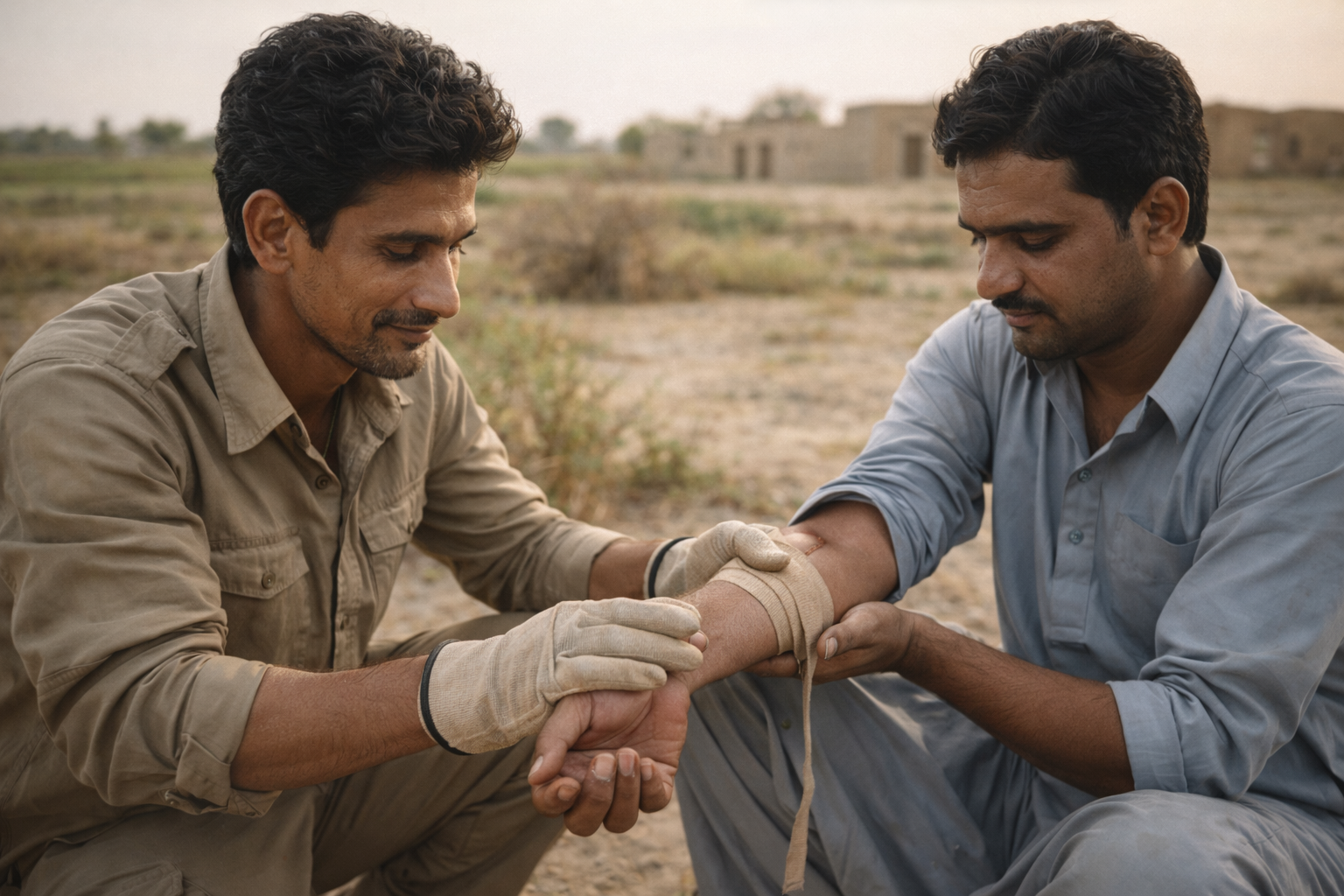
Knowing the correct snake bite first aid can mean the difference between life and death — especially in rural Pakistan where hospital access is limited.
Watch: Snake Bite First Aid Explained
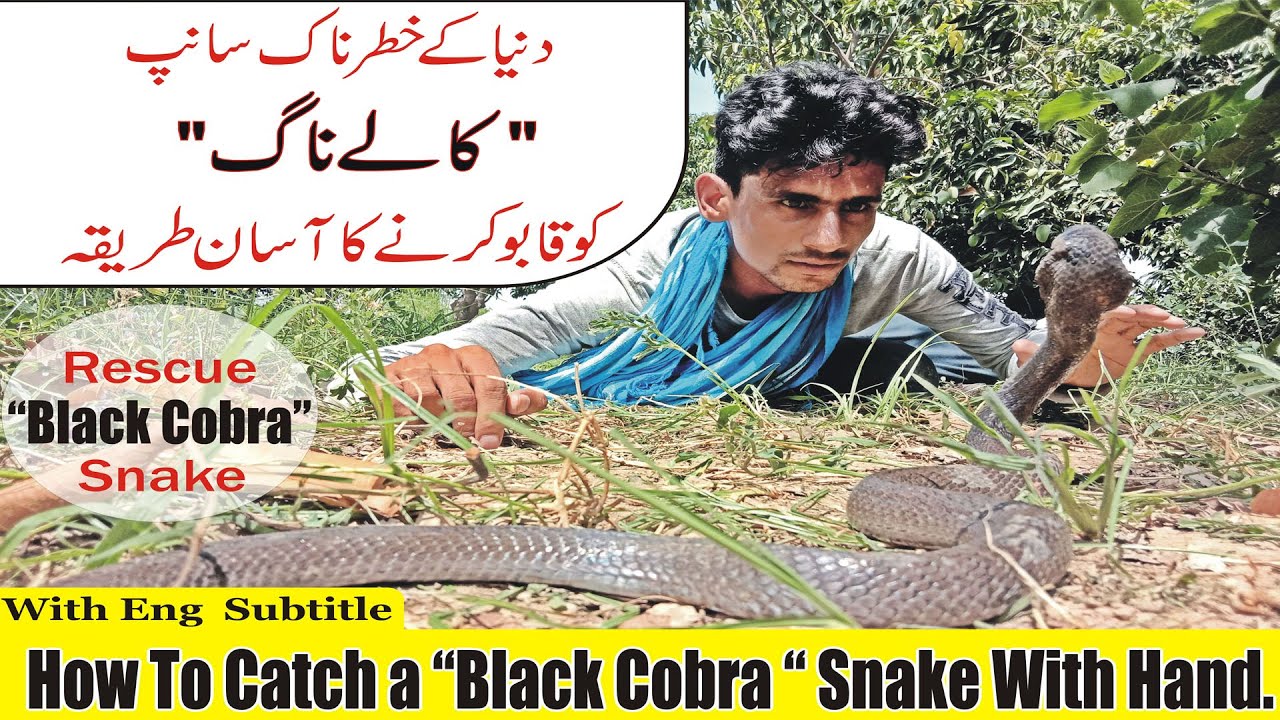
🎬 Watch our detailed explanation of snake bite first aid — by WildRush Pakistan.
What Happens After a Snake Bite?
Not all snake bites are the same. The effects depend on the type of venom the snake carries. Understanding this helps you recognize symptoms and act quickly.
Neurotoxic Venom (Cobras & Kraits)
Neurotoxic venom attacks the nervous system. It blocks signals between the brain and muscles, leading to paralysis. Here's what happens:
- Within 30 minutes: Drooping eyelids, blurred or double vision
- Within 1–2 hours: Difficulty speaking, swallowing, and breathing
- Within 2–3 hours: Muscle paralysis, respiratory failure — can be fatal without treatment
Hemotoxic Venom (Vipers)
Hemotoxic venom destroys blood cells and tissues. It causes internal bleeding and massive swelling. Symptoms include:
- Within 30 minutes: Intense pain, swelling, and redness at the bite site
- Within 1–3 hours: Bruising spreading up the limb, bleeding from gums or nose
- Within 3–6 hours: Blood clotting failure, kidney damage, tissue necrosis
What You Must NEVER Do After a Snake Bite
These are the most common snake bite myths that people still follow — and every single one of them can kill the patient faster than the venom itself.
1. Never Apply a Tourniquet
Tying a rope, cloth, or belt tightly around the bitten limb is one of the most dangerous mistakes people make.
2. Never Cut the Wound
Some people believe that cutting the bite site and draining blood will remove the venom. This is completely false.
3. Never Suck Out the Venom
This myth has been popularized by movies and old survival guides. Whether done by mouth or with a suction device — it does not work.
4. Never Use Herbs or Desi Remedies
In many parts of Pakistan and India, people rush to local healers (peers, hakims) for herbal pastes, chanting, or other traditional treatments after a snake bite.
5. Never Panic or Run
Panic is a natural reaction to a snake bite. But running, moving quickly, or panicking is one of the worst things you can do.
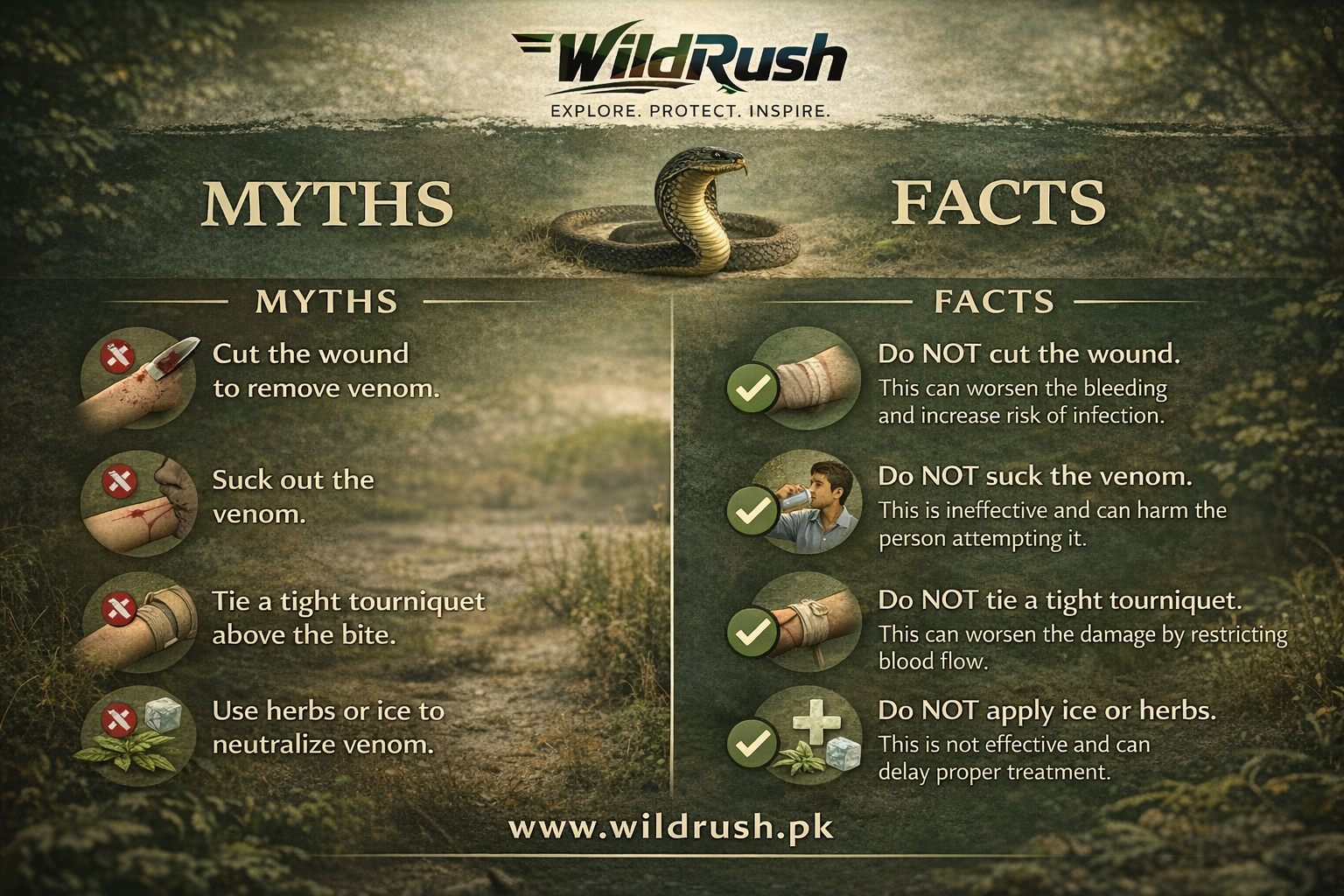
These common "remedies" are actually deadly mistakes — never apply a tourniquet, cut the wound, or use herbal treatments on a snake bite.
Correct Snake Bite First Aid Steps
Now that you know what not to do, here are the correct snake bite first aid steps that actually help save lives.
- Stay calm: Reassure the patient. Panic speeds up venom spread. Keep them still and lying down if possible.
- Immobilize the bitten limb: Use a splint or bandage to keep the bitten arm or leg completely still. Keep it below heart level to slow venom spread through the lymphatic system.
- Remove tight items: Remove rings, bracelets, watches, or tight clothing near the bite — swelling will increase rapidly.
- Gently wash the wound: Clean the bite area with clean water and mild soap. Do not apply ice, pressure, or any ointments.
- Keep the patient still: Do not let them walk or move. Carry them to the vehicle if possible.
- Note the time: Record when the bite happened. This helps doctors assess how much time has passed for treatment planning.
- Rush to the nearest hospital: Transport the patient to the nearest hospital with antivenom as quickly as possible. Call ahead if you can.
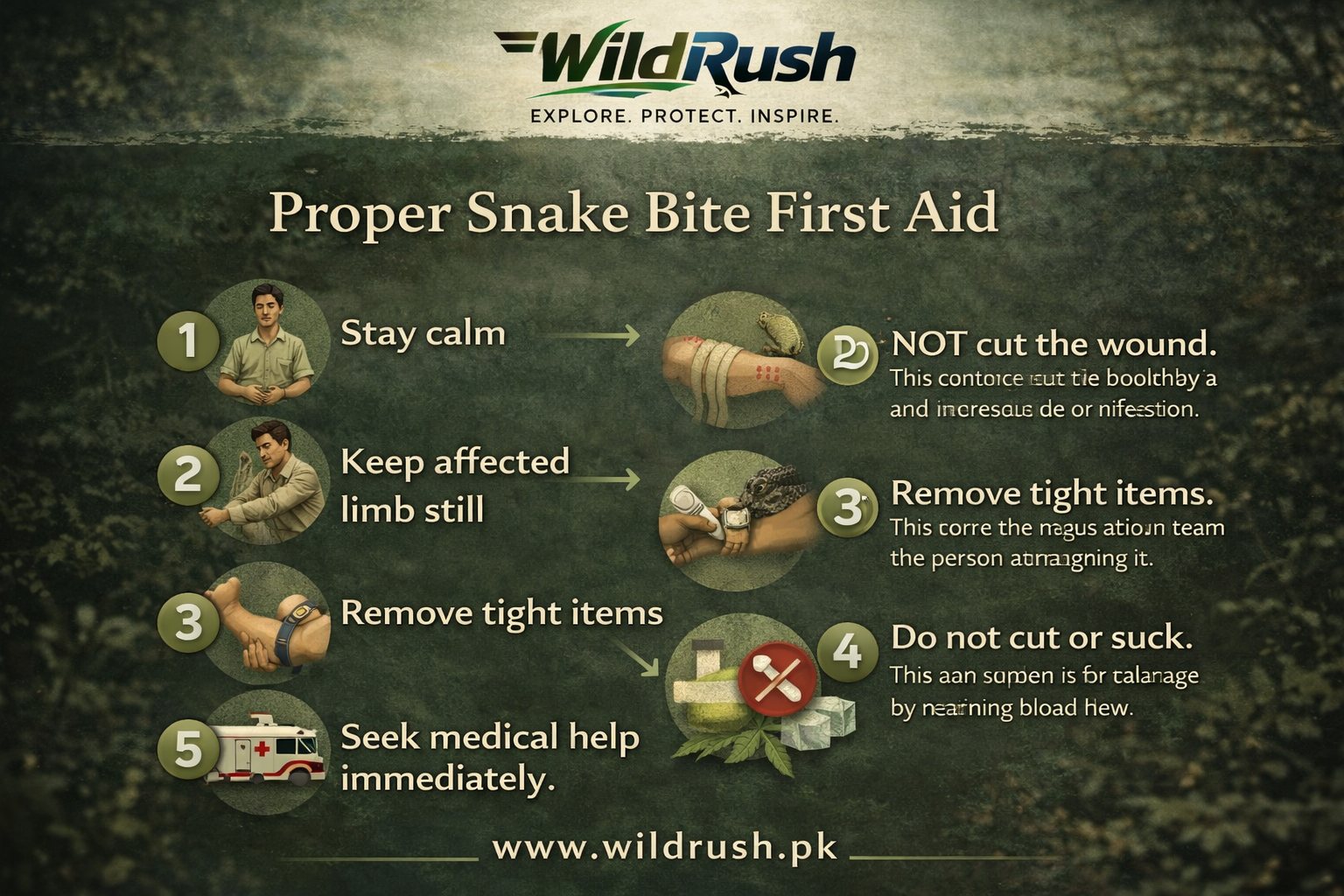
Correct snake bite first aid: stay calm, immobilize the limb, wash gently, and rush to the hospital for antivenom treatment.
Antivenom Explained
Antivenom (also called antivenin or anti-snake venom serum) is the only scientifically proven treatment for venomous snake bites. It is not a poison — it is a life-saving medicine.
What Is Antivenom?
Antivenom is a medicine made from antibodies that can neutralize snake venom in the human body. Think of it as a targeted antidote designed specifically to fight the toxic proteins in venom.
How Is Antivenom Made?
The process is fascinating and has been used for over a century:
- Venom extraction: Small amounts of venom are safely collected from venomous snakes
- Injection into horses: Tiny, non-lethal doses of venom are injected into horses over several months
- Antibody production: The horse's immune system naturally produces antibodies against the venom
- Blood collection: Blood is drawn from the horse, and the antibodies are separated and purified
- Antivenom serum: These purified antibodies become the antivenom medicine used in hospitals
How Does It Work?
When injected into a snakebite patient through an IV drip, the antibodies in antivenom bind to the venom molecules and neutralize them. This stops the venom from causing further damage to tissues, blood, or the nervous system.
Safety and Side Effects
Antivenom is safe when administered by trained medical staff. Some patients may experience:
- Mild allergic reactions: Itching, hives, or mild fever — managed with antihistamines
- Serum sickness: A delayed reaction (5–10 days later) with joint pain and rash — treatable with steroids
- Anaphylaxis: Rare but serious — hospitals are equipped to handle this immediately
Golden Time — Why Every Minute Counts
In snake bite treatment, doctors talk about the "golden time" — the critical window after a bite when treatment is most effective.
- Within 1 hour: Antivenom is most effective. Survival rate is extremely high with proper treatment
- Within 1–3 hours: Treatment is still highly effective, but symptoms may have progressed
- After 3–6 hours: Venom damage becomes harder to reverse. Risk of permanent organ damage increases
- After 6+ hours: Chances of complications rise sharply — kidney failure, tissue necrosis, or death
Snake Bite Myths vs Reality
Misinformation kills more people than venom. Here are the most dangerous snake bite myths — and the truth that can save lives.
| ❌ Myth | ✅ Reality |
|---|---|
| Tying a tourniquet stops venom from spreading | Tourniquets trap venom, cause tissue death, and can lead to amputation |
| Sucking out venom saves the patient | Suction removes less than 0.1% of venom and increases infection risk |
| Cutting the bite releases the poison | Cutting adds injury, causes bleeding, and does not remove venom |
| Herbal paste or desi remedies cure snake bites | No herb can neutralize venom — only antivenom works |
| If there's no swelling, the bite is harmless | Neurotoxic bites (cobra, krait) may show no swelling but can still be fatal |
| You need to catch and bring the snake to the hospital | Doctors treat based on symptoms, not the snake — never delay transport to catch it |
| Drinking alcohol helps fight the venom | Alcohol dilates blood vessels and spreads venom faster through the body |
| Electric shock neutralizes venom | This is completely false and can cause burns, cardiac arrest, or death |
| Snake bites always kill | With timely antivenom treatment, the survival rate for snake bites is very high |
Can You Carry Antivenom Yourself?
Some people in remote areas wonder if they should buy and carry antivenom at home for emergencies. While the intention is good, this is not recommended for several important reasons:
- IV administration required: Antivenom must be given through an intravenous drip by trained medical staff — it cannot be injected at home like a regular injection
- Allergic reaction risk: Antivenom can cause anaphylaxis (a severe allergic reaction) that requires immediate medical intervention with adrenaline and oxygen
- Cold chain storage: Antivenom must be stored at 2–8°C in a refrigerator — improper storage renders it useless
- Dosage complexity: Doctors determine the dose based on the severity of envenomation — too little won't work, and incorrect use wastes critical medicine
- False sense of security: Having antivenom at home might delay the decision to go to a hospital, wasting the golden time
The Big Four — Most Dangerous Snakes in Pakistan & India
In South Asia, four snake species are responsible for the vast majority of snakebite deaths. They are known as the "Big Four":
1. Indian Cobra (Naja naja)
- Venom type: Neurotoxic
- Symptoms: Drooping eyelids, difficulty breathing, paralysis
- Found in: Punjab, Sindh, KPK — near human settlements, farms, and gardens
- Danger level: Highly dangerous — causes respiratory failure without treatment
2. Common Krait (Bungarus caeruleus)
- Venom type: Highly neurotoxic
- Symptoms: Often painless bite (victims may not realize they were bitten), progressive paralysis, abdominal pain
- Found in: Throughout Pakistan — often enters homes at night, hides in bedding
- Danger level: Extremely dangerous — responsible for many deaths because bites often go unnoticed until symptoms appear
3. Russell's Viper (Daboia russelii)
- Venom type: Hemotoxic
- Symptoms: Severe pain, massive swelling, bleeding from gums and wounds, kidney failure
- Found in: Sindh, southern Punjab — in agricultural fields and grasslands
- Danger level: Very dangerous — causes severe tissue damage and organ failure
4. Saw-scaled Viper (Echis carinatus)
- Venom type: Hemotoxic
- Symptoms: Pain, swelling, bleeding that won't stop, blood in urine
- Found in: Thar Desert, Balochistan, Sindh — in dry, rocky, and sandy terrain
- Danger level: Responsible for more snakebite deaths in Pakistan than any other species due to its aggressive nature and abundance in rural areas
How Doctors Treat Snake Bites
Many people wonder what happens when a snakebite patient arrives at the hospital. Here's how doctors handle snake bite treatment:
Initial Assessment
There is no specific blood test that instantly confirms what type of snake bit the patient. Instead, doctors:
- Examine the bite wound and check for fang marks
- Monitor for symptoms — swelling, bleeding, vision changes, breathing difficulty
- Ask the patient or family about the time of bite, snake appearance, and first aid given
- Run blood tests to check clotting time, kidney function, and blood counts
Treatment Protocol
- Observation: If symptoms are mild or it might be a dry bite, doctors observe for several hours
- Antivenom administration: If envenomation is confirmed, antivenom is given through an IV drip — usually 5–10 vials depending on severity
- Supportive care: Pain management, IV fluids, wound care, tetanus prophylaxis
- Ventilator support: For neurotoxic bites causing respiratory failure, mechanical ventilation may be needed
- Dialysis: For hemotoxic bites causing kidney failure, emergency dialysis may be required
Long-Term Risks if Snake Bites Are Ignored
Delaying treatment or relying on wrong first aid doesn't just risk death — it can cause permanent, life-altering damage:
- Severe infection: Untreated bite wounds become breeding grounds for bacteria, leading to sepsis (blood poisoning) that can be fatal
- Tissue necrosis: Hemotoxic venom destroys skin, muscle, and bone tissue around the bite. Dead tissue turns black and rots, requiring surgical removal
- Amputation: In severe cases of necrosis or gangrene (often worsened by tourniquets), doctors may have no choice but to amputate the affected limb
- Kidney failure: Venom can permanently damage the kidneys, requiring lifelong dialysis
- Permanent disability: Nerve damage from neurotoxic venom can cause lasting weakness, vision problems, or partial paralysis
Quick Emergency Checklist
Print this, save it on your phone, or share it with your family. In a snake bite emergency, every second counts.
✅ DO These Things
- Stay calm — reassure the patient and keep them still
- Immobilize the bitten limb — use a splint or firm bandage
- Remove rings, bracelets, and tight clothing near the bite
- Wash the wound gently with clean water
- Note the time of the bite
- Take a photo of the snake from a safe distance (if possible)
- Rush to the nearest hospital with antivenom — call ahead
- Carry the patient — do not let them walk
❌ NEVER Do These Things
- Never tie a tourniquet around the limb
- Never cut the wound or try to drain blood
- Never suck the venom out by mouth or device
- Never apply herbal paste, desi remedies, or black stone
- Never give the patient alcohol
- Never apply ice or electric shock to the bite
- Never waste time visiting a local healer instead of a hospital
- Never let the patient run, walk, or panic
Frequently Asked Questions
Conclusion
Snake bite first aid is not about being brave or acting fast in the wrong way — it's about knowing the right steps and avoiding the deadly mistakes that have cost thousands of lives across Pakistan and South Asia.
The message is simple: stay calm, immobilize the limb, skip the myths, and get to a hospital with antivenom as fast as possible. No tourniquet. No cutting. No sucking. No herbal remedies. Just smart, calm, evidence-based action.
At WildRush Pakistan, we've seen the consequences of wrong first aid firsthand during our wildlife rescue operations. We've met families who lost loved ones because they spent hours at a local healer instead of a hospital. And we've also met survivors who made it because someone in their family knew the right steps.
Be that person. Share this article with your family, your neighbors, your village WhatsApp group. In snake bite emergencies, knowledge is the real antivenom. 🐍🌿